
AG Tumormikroumgebung und vaskulärer Metabolismus (Becker)
AG Tumormikroumgebung und vaskulärer Metabolismus (Becker)
Immune checkpoint blockade has revolutionized cancer therapy, particularly in melanoma. However, despite durable responses in a subset of patients, approximately 60% do not benefit, highlighting the urgent need to identify predictive biomarkers, uncover resistance mechanisms, and develop more effective therapeutic strategies.
The tumor vasculature represents a critical, yet often underappreciated, component of the tumor microenvironment. Blood vessels are not merely passive conduits supplying nutrients and oxygen; they play active and multifaceted roles in tumor progression. Our research focuses on endothelial cells, which line the inner walls of blood vessels and occupy a strategic position at the interface between the circulation and tumor tissue.
Endothelial cells regulate angiogenesis and control immune cell infiltration into tumors, thereby influencing key aspects of anti-tumor immunity. By governing the entry of immune cells, they shape the composition and function of the tumor immune microenvironment.
Our lab investigates the interactions between endothelial cells and T cells, with the aim of understanding how these interactions can be leveraged to improve cancer therapies. We focus on both direct cellular crosstalk and the metabolic regulation of these cell types, seeking to uncover mechanisms that can be targeted to enhance therapeutic responses.
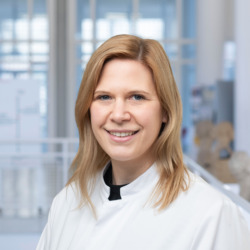
Jun. Univ.-Prof. Dr. rer. nat.
Lisa Becker
Our research focuses on the role of endothelial cells as active regulators of anti-tumor immunity in melanoma. In particular, we investigate how endothelial cells interact with T cells within the tumor microenvironment and how these interactions influence responses to immune checkpoint blockade.
We aim to understand how specific endothelial–T cell interactions are regulated at the molecular level, including the signals that control T cell recruitment, activation, and function in tumors. A key aspect of our work is the role of metabolic regulation in both cell types, and how metabolic cues shape their crosstalk.
By dissecting these mechanisms, we seek to identify new strategies to enhance T cell infiltration and activity in tumors, with the ultimate goal of improving immunotherapy outcomes in melanoma.
Jun. Univ.-Prof. Dr. rer. nat.
Lisa Becker